Listening
The Origins of the English Language
Listen to this recording and fill in the gaps with ONE word.
English has borrowed words from Latin and Greek for new technical (1)__________ and inventions.
Celtic languages exist only in lonely (2)___________.
Not many languages have had to weather greater (3)___________and (4)_____________ in the course of their history.
Old English was introduced into England in the 5th century by (5)___________ from Germany, Denmark and the Netherlands.
Celtic languages are the (6)___________ of today's Welsh and Scottish Gaelic.
Text Adapted from: The Origins of the English Language. Anne Scott Hagen. 13/05/2018. National Digital Learning Arena (NDLA). https://ndla.no/subject:1:9b93cd9e-a45c-428c-a8fb-b4955169efdf/topic:4e8612a2-31eb-4da1-a142-79bcfbdc0bd8/resource:1:9168 CC BY-SA 4.0.
Audio: The Origins of the English Language. London Language Experience. https://api.ndla.no/audio/files/URhHLAeZ.mp3. CC BY-SA
KEY
Listening
discoveries
fringes
knocks
buffetings
invaders
origin
Speaking
Dialogue. Have a conversation with a partner about these questions.
Do you have an ear for languages or music?
What can put people off learning English?
What strategies do you have to improve your accuracy?
What do you think the future holds in store for the English language?
Why do you think the use of emojis in written communication is witnessing such a huge growth? Is an emoji worth a thousand words? To what extent do you think technology influences how people communicate with each other?
Monologue.
A friend of yours from England is studying linguistics and his teacher has asked him to write a report about the state of languages in different parts of the world. He would like to write about languages in Spain. He hopes you can shed some light on the state of languages in your country. He asks you some questions about this topic. You decide to send your friend a voice message with an explanation of 4 minutes.
Questions
1. Could you please comment on the pictures I have sent you?
2. Is English used as a lingua franca in Spain when you need to speak with people from different parts of the world?
3. Are there any minority languages in Spain? Are they marginalised or preserved? Are any of them dying out? What is being done to ensure their survival? What else could be done?
4. Are languages in Spain tools of communication and understanding or instruments of conflict?
5. Is Spain a multicultural society nowadays? What are the benefits and drawbacks?
6. Do Spanish parents like to raise multilingual children? Why? What challenges does it pose?
7. Do Spanish people learn languages even in their adult life? Why? What challenges does it pose?
8. Does the media in Spain incorporate terms from other languages? Do they use Anglicisms? What Anglicisms do Spanish people use in their everyday lives? In what fields of knowledge can you find foreign words in Spain? Do people embrace these terms? Does an excessive use of borrowings cause controversy at times?
9. What languages may be useful for Spaniards to learn? Why?
Written Mediation
Tips to become an expert language learner.
You are an advanced English learner at the C1 level at the EOI. Your friend John has decided to take up Spanish classes this year. He has never learnt a foreign language before and he has been placed in the A1 Spanish class. He has asked you for some advice on how to learn vocabulary. Send him an email giving him some tips based on the infographic below. (150 words)
Tips to become an expert language learner
1. Select and record
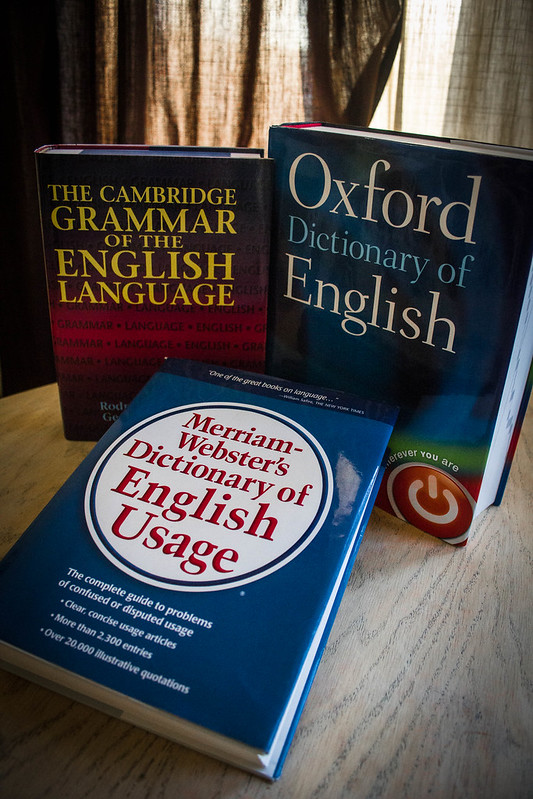
All the Words. Graham Campbell. April 30, 2013. flickr. https://www.flickr.com/photos/gj_thewhite/8695759249. CC BY-SA 2.0
2. Contextualise and personalise
3. Review
4. Use
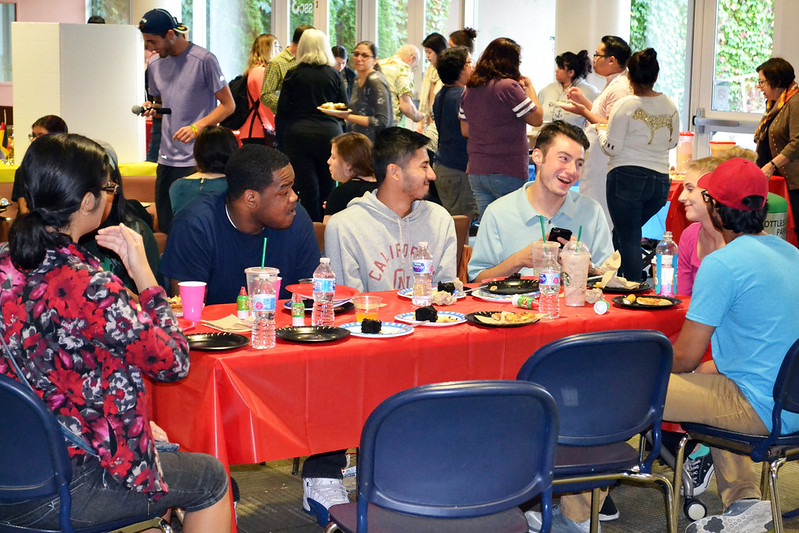
Multicultural Mashup Celebrates Languages and Cultures at COD 2018 10. COD Newsroom. October 3, 2017. flickr. https://www.flickr.com/photos/41431665@N07/23625814808/.CC BY 2.0.
References:
Scott Hagen, A. (2018) The Origins of the English Language.. National Digital Learning Arena (NDLA). https://ndla.no/subject:1:9b93cd9e-a45c-428c-a8fb-b4955169efdf/topic:4e8612a2-31eb-4da1-a142-79bcfbdc0bd8/resource:1:9168
London Language Experience. The Origins of the English Language. https://api.ndla.no/audio/files/URhHLAeZ.mp3.
Campbell, G. 2013. All the Words. Recuperat de: https://www.flickr.com/photos/gj_thewhite/8695759249.
COD Newsroom. (2017). Multicultural Mashup Celebrates Languages and Cultures at COD. flickr. Recuperat de: https://www.flickr.com/photos/41431665@N07/23625814808/.
Languages © 2024 by Tomeu Aloy is licensed under CC BY-SA 4.0 


